
Portfolio — Video Design & Direction
Electric CityNew Dimension
Electric City: New Dimension is a 50-minute live dance and circus spectacular, built around a fully designed LED environment spanning three main screens, an integrated pixel grid throughout the stage set and LED costumes and props that blur the line between performer and stage.
The production runs as a fixed-venue residency across all three Butlins sites — Minehead, Bognor Regis and Skegness — comprising around 40 shows per year over a two-year run. Every element of the video design from initial concept through to final delivery was built by Jamie Shaw.
Client: The Production Boutique
Venue / Presenter: Butlins
Costume and prop LED sequencing: Dreamtech Entertainment
Commissioned by The Production Boutique, Jamie Shaw has served as the sole Video Designer & Director across the Electric City series since its inception in 2020. Each iteration has expanded in technical scope and creative ambition: EC3 is the most complex version of the concept to date — introducing three independent main LED screens for the first time, significantly expanding the embedded pixel infrastructure, and requiring the visual world to be designed as a unified composition across a split, multi-surface canvas.


EC3 introduced three separate main LED screens for the first time, requiring the visual world to be designed and spread across a split canvas — a fundamentally different compositional challenge. The role has encompassed full creative and technical ownership at every stage, from establishing the visual language of the show in pre-production through to pipeline build, content creation, and final delivery.
The centrepiece of Electric City: New Dimension is the City — a fully designed, three-screen urban environment set in London, built to serve the show across multiple narrative eras. Rather than a single static backdrop, the City was constructed as a layered compositing system: high-quality path-traced renders at its foundation, with animated lighting, mattes and special elements on top.
 Three-Screen Composite — Stage Right · Centre · Stage Left
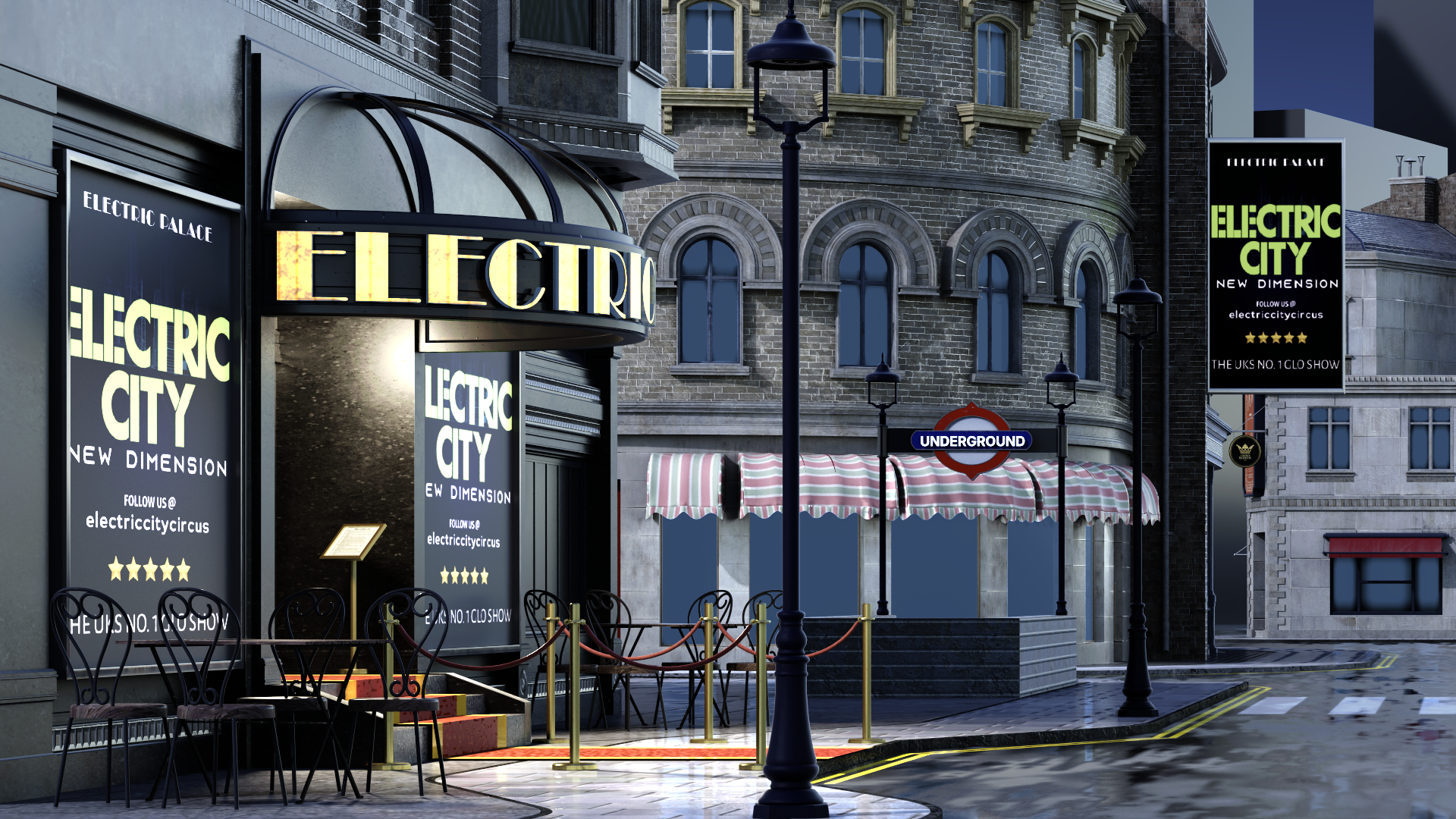

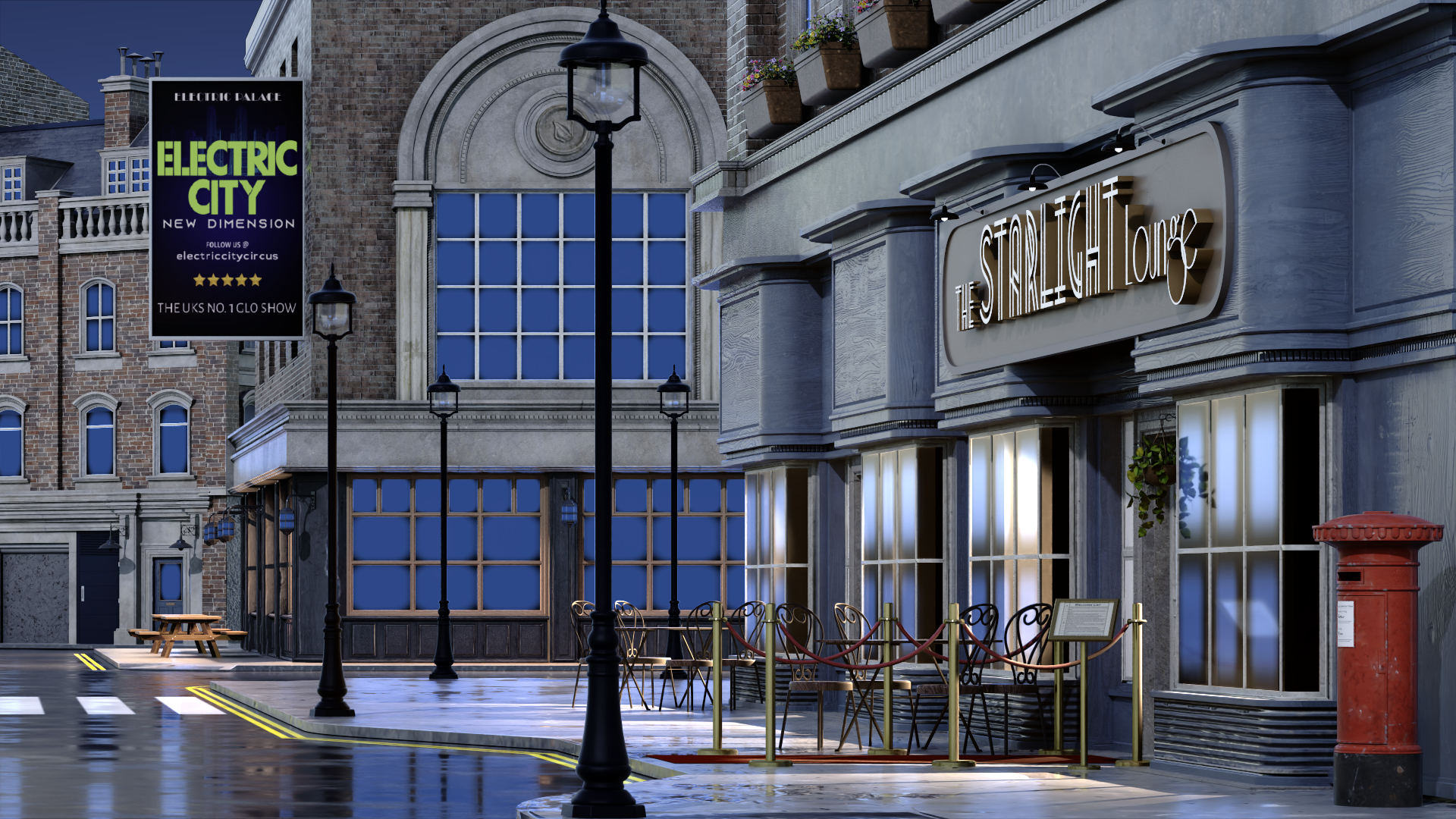
Locked-off cameras enabled a shift away from real-time rendering for the base layers, towards path-traced 32-bit EXR stills rendered in Cinema 4D. This allowed a far greater number of individual light sources — complex multi-source lighting setups, wet road reflections, and detailed window illumination that would be computationally prohibitive in real time.
A duplicate Notch build was created for each screen in which a single core material was connected to every surface in the scene. Piping generative textures into this material produces unique, scene-accurate mattes that animate specific areas of the image — windows, surfaces, architectural details — without re-rendering the base.
The City is designed to work across three eras — 1940s pre-war, 1970s/80s, and present day — without full redecoration. Architecture was selected to sit credibly in all three periods; colour and pattern design carry the era-specific differentiation.
All lighting patterns within the City were built to mimic the visual language of live event lighting, so that when viewed alongside real stage lighting in the venue, the screen world reads as a natural extension of the physical environment rather than a separate layer behind it.
 Lyrics Wall
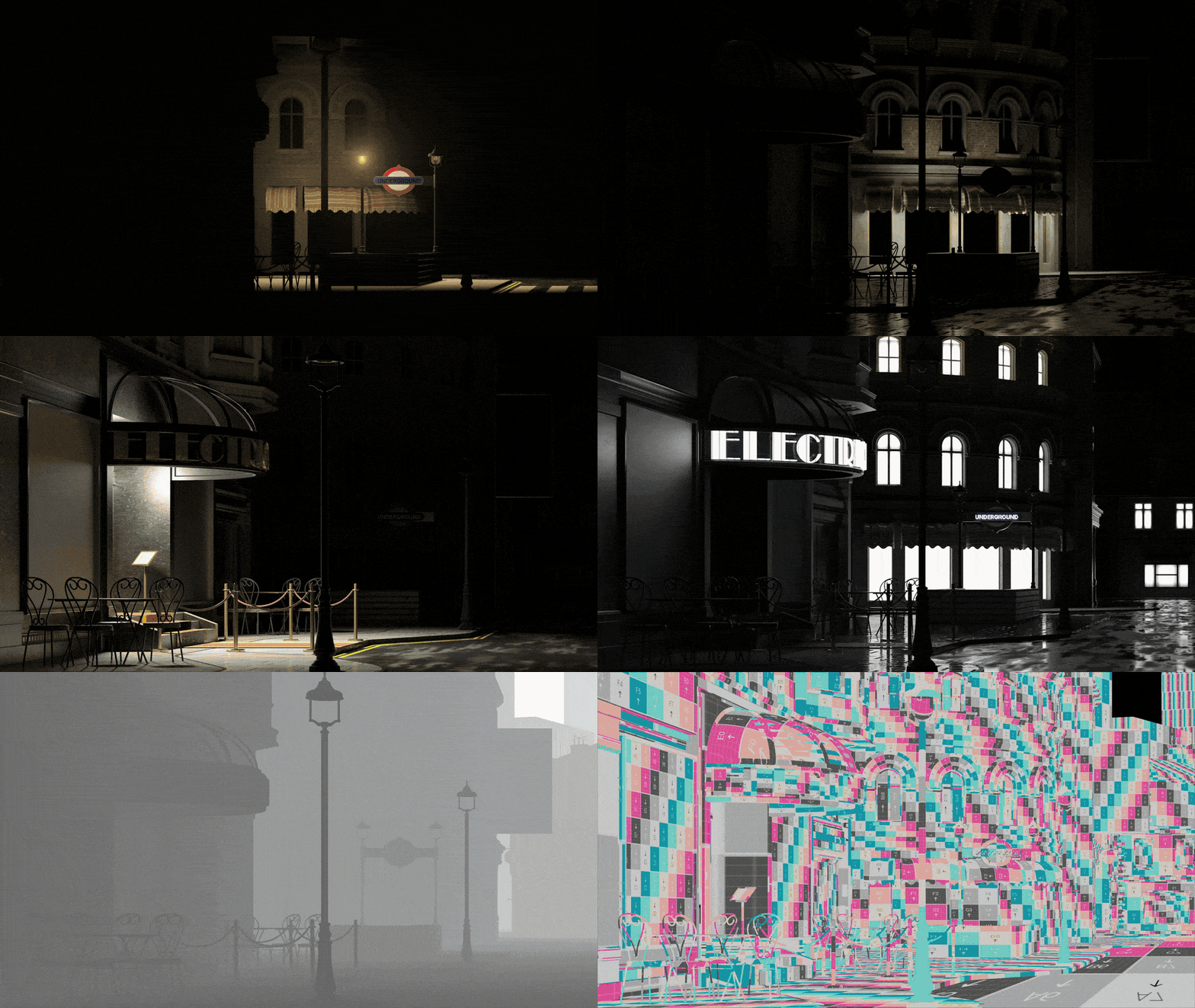 Lighting Layers — City Base Look
 Globot / Space
 Extra Looks Slideshow — Three-Screen Composite
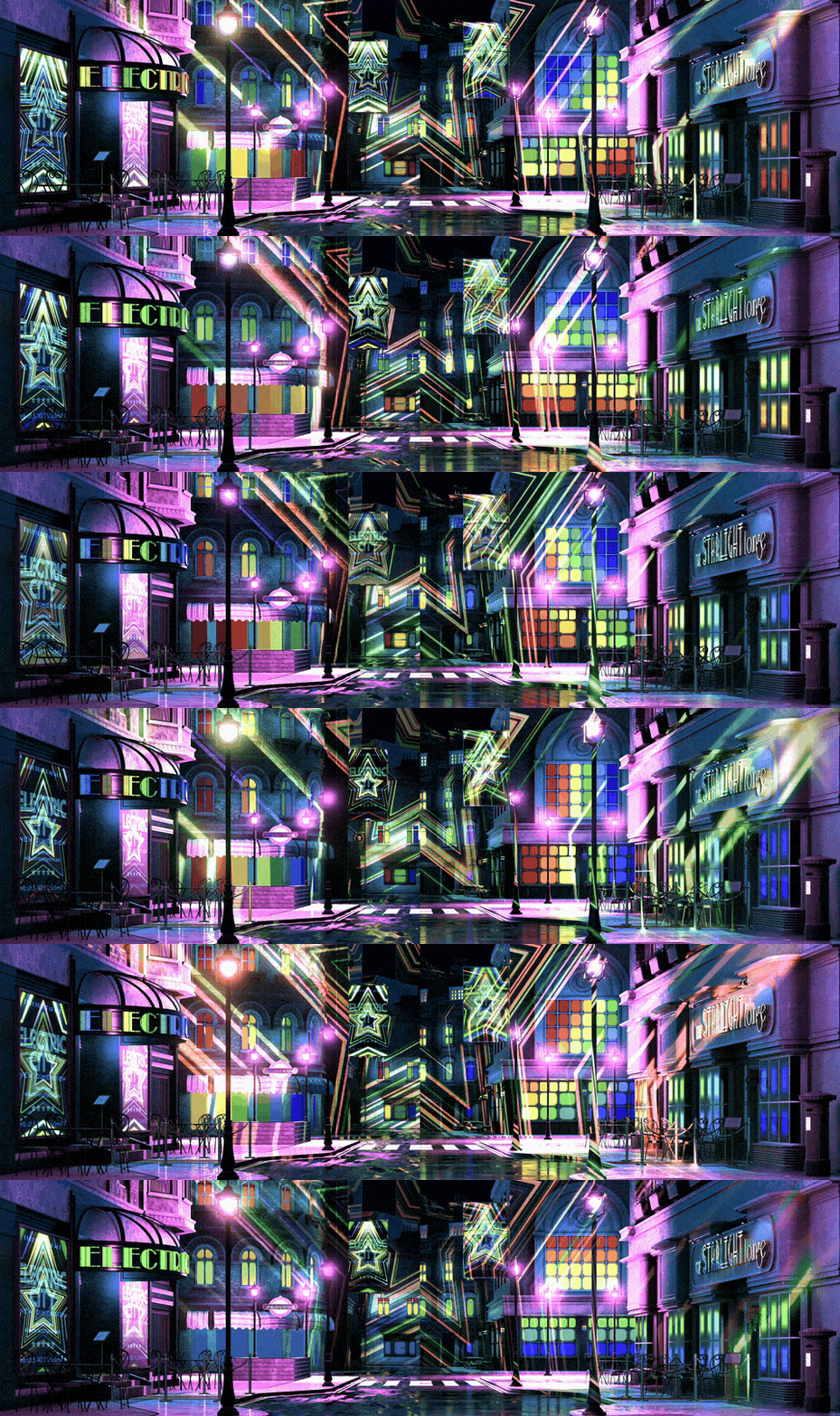 Disco
 B&W Look
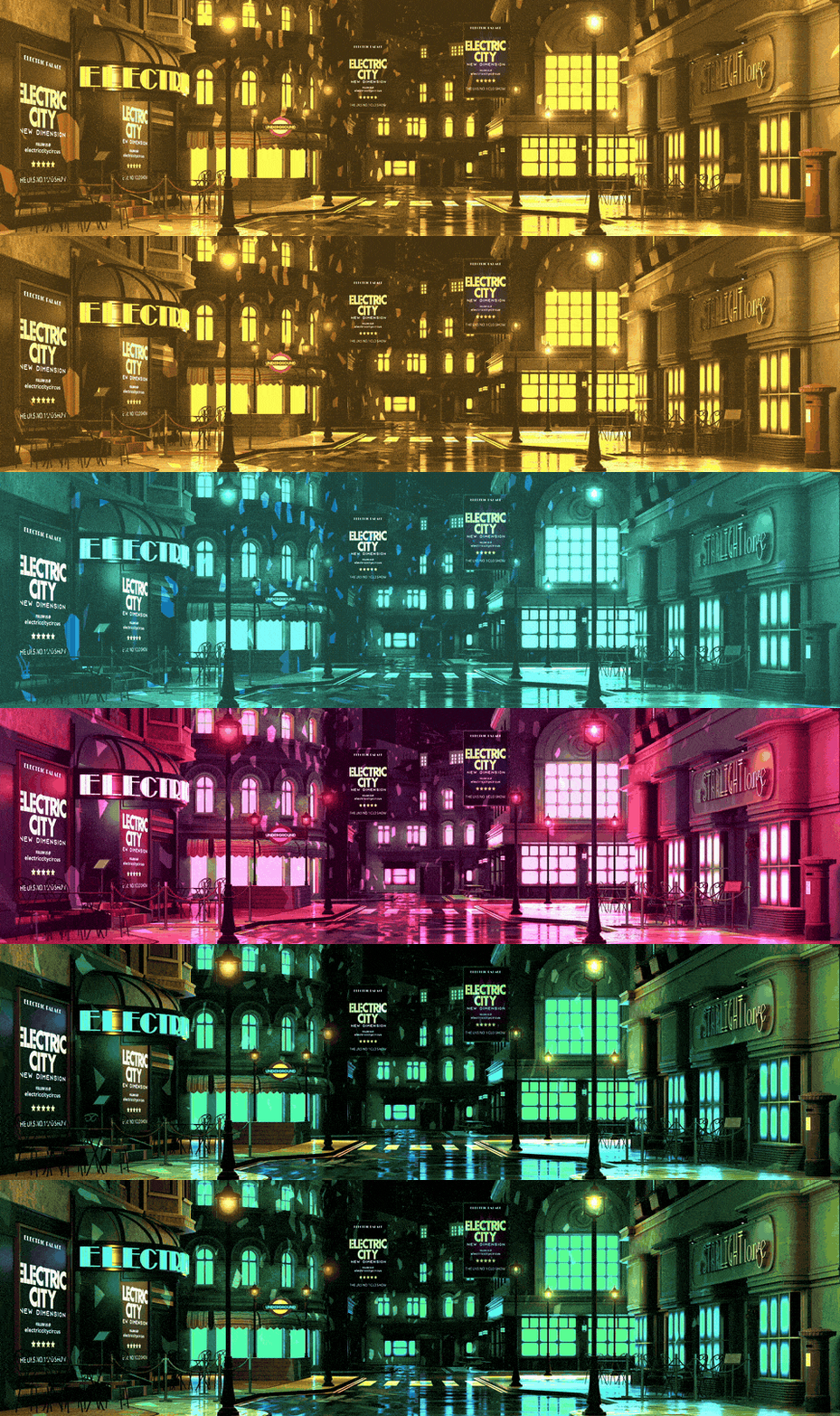 Colour Change
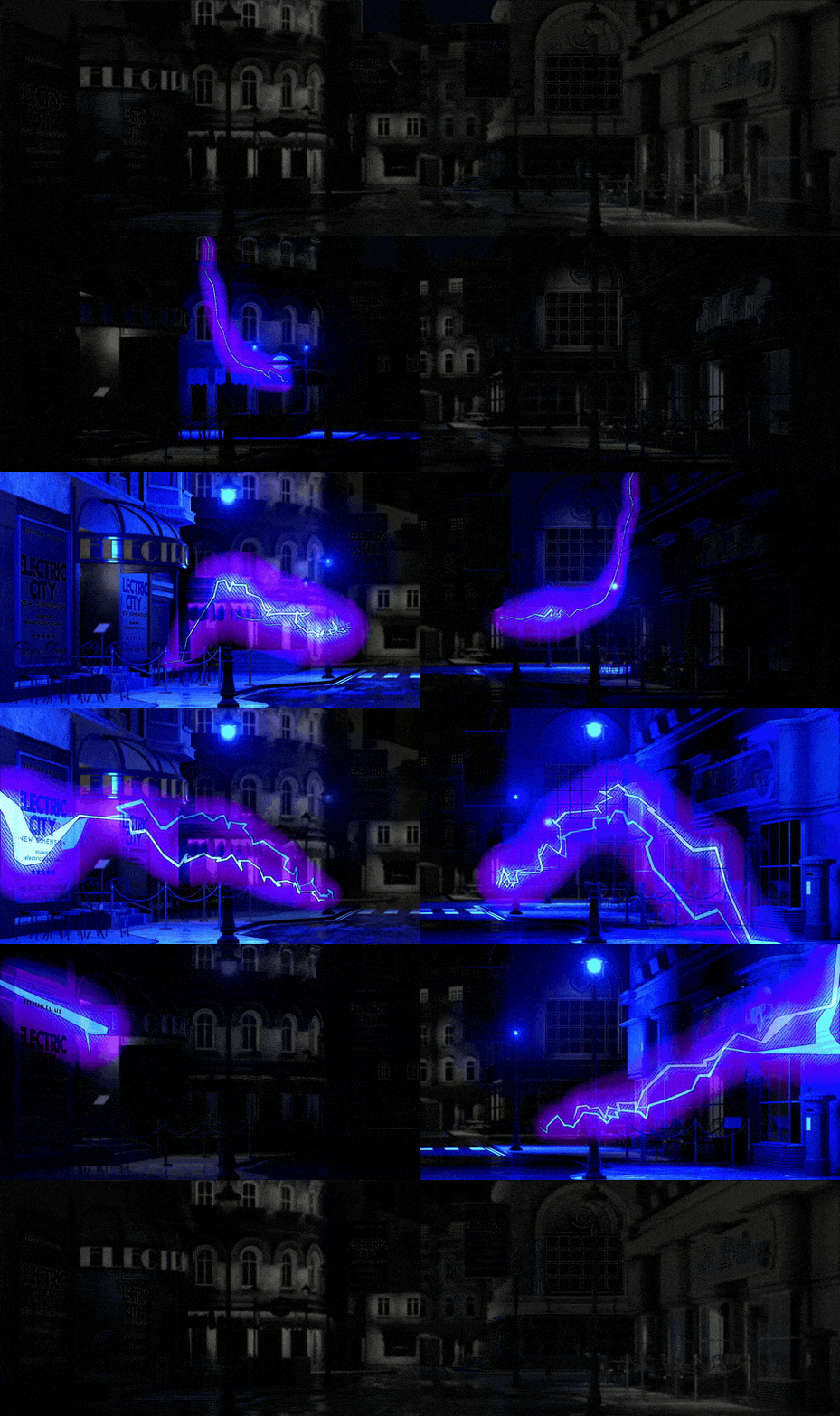 Lightning
 Musical Patterns I
 Musical Patterns II
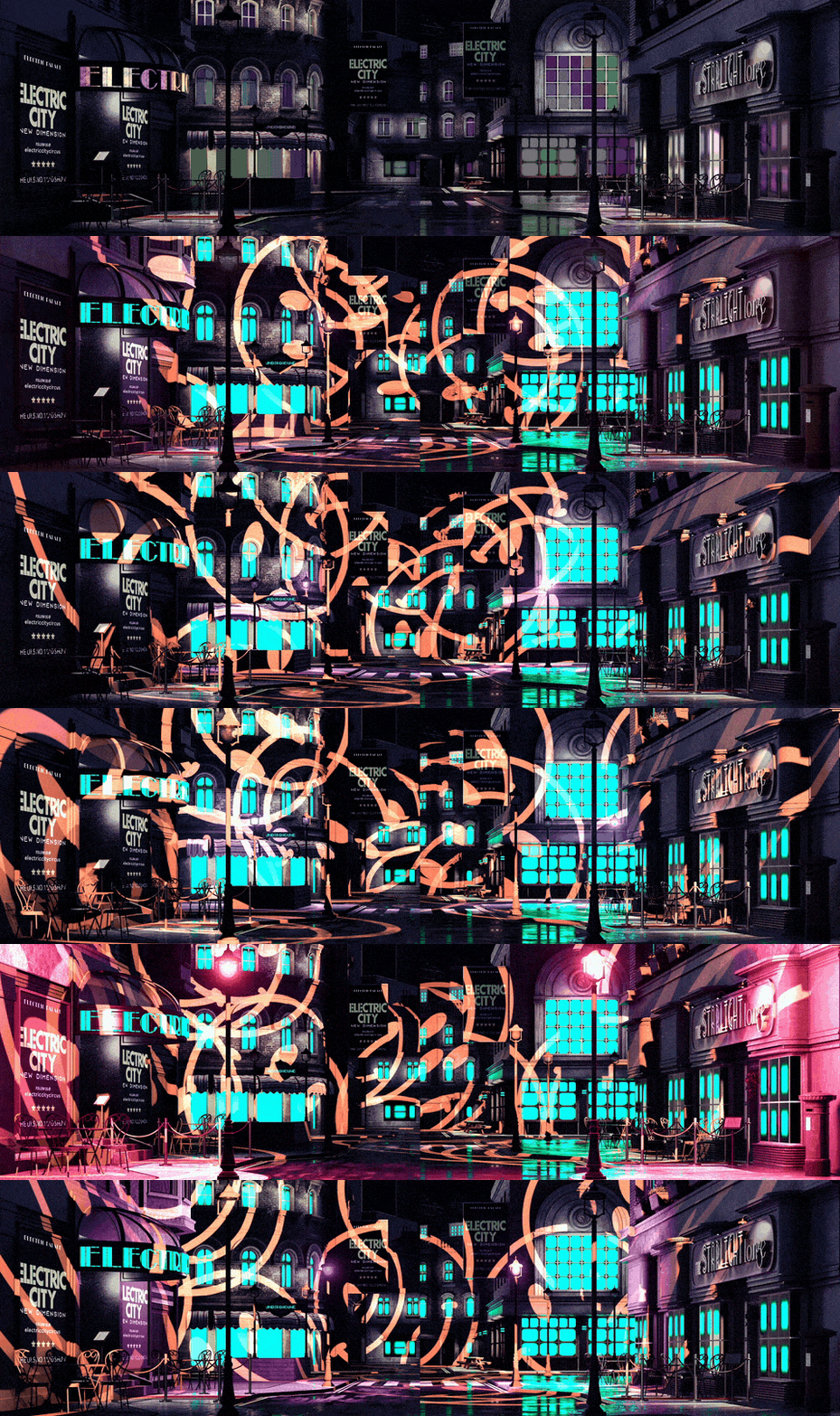 Musical Patterns III
Creating content for a live LED environment demands a fundamentally different approach to screen-based design. Every creative decision — composition, colour grading, motion speed, contrast — must account for the physical characteristics of the hardware: pixel pitch, brightness response, viewing distance, and the way LED panels render colour differently to a monitor.
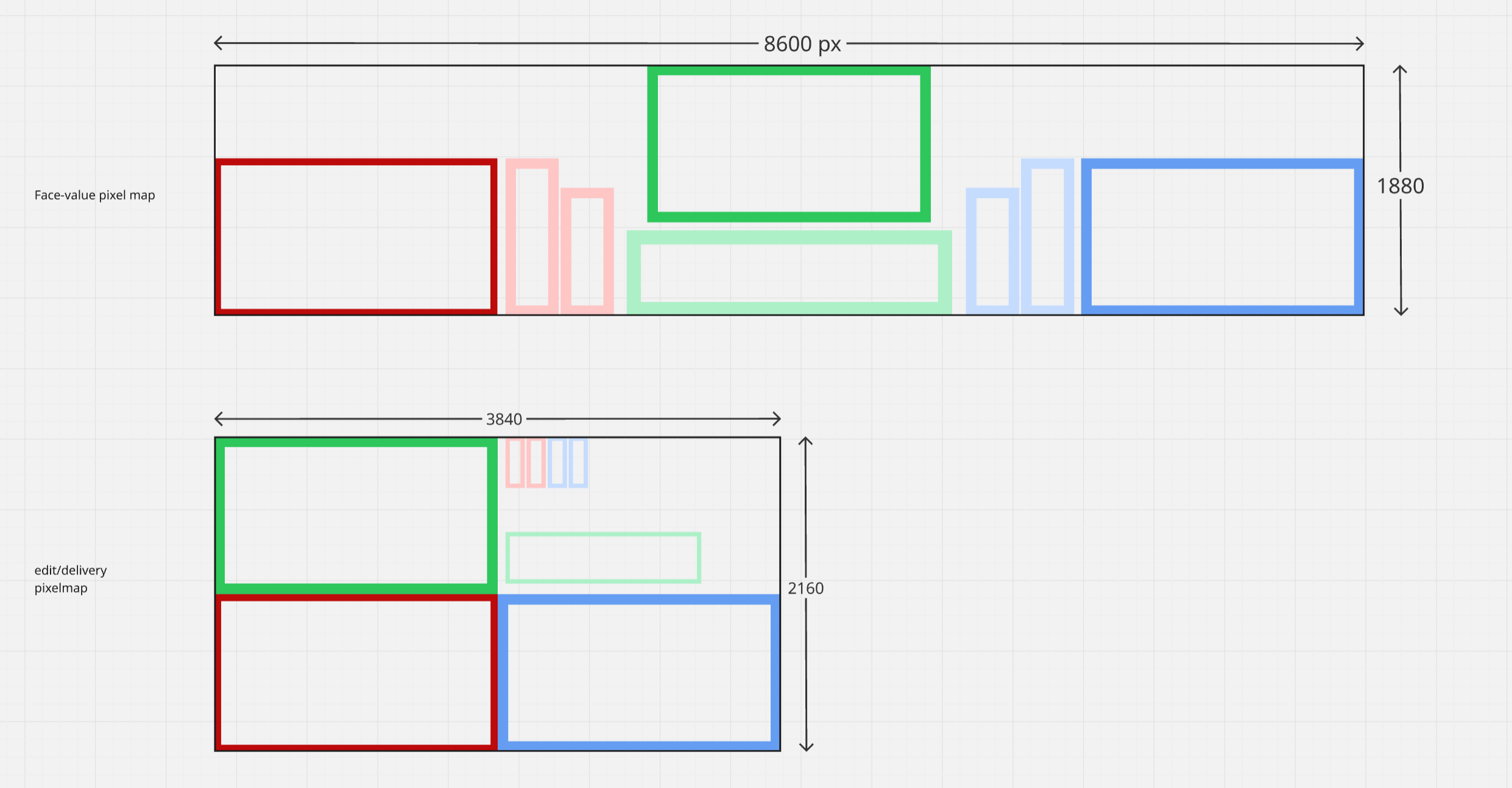 Face-Value Pixel Map → Delivery Map → Previz
One pixel grid presented a unique technical challenge: pixels were embedded behind a brick wall artwork, with each pixel mapping to an irregular surface of bricks, ledges and window panes of varying sizes and positions — not a standard uniform grid. No off-the-shelf solution existed. A custom HLSL shader was written: every brick, ledge and window pane across the surface was individually mapped — its size and position defined in arrays — so that content playing across the grid would resolve correctly against the physical artwork, with each irregular cell receiving its portion of the image cleanly. The result: a fully functional, visually coherent pixel surface on a structurally non-uniform display.
 HLSL Array — Brick / Ledge / Window Mapping
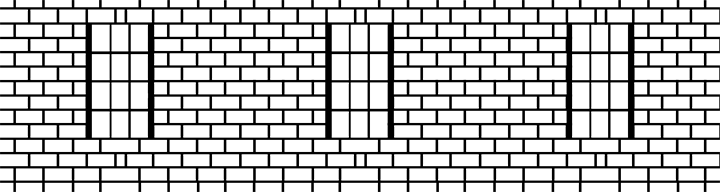 Brick Wall Pixel Grid — Physical Stage Surface
Diagram showing the three main screens and five pixel grid positions across the stage set — their physical dimensions, relative positions, and pixel pitch specifications.
Stage Layout — Three Main Screens + Five Pixel Grid Positions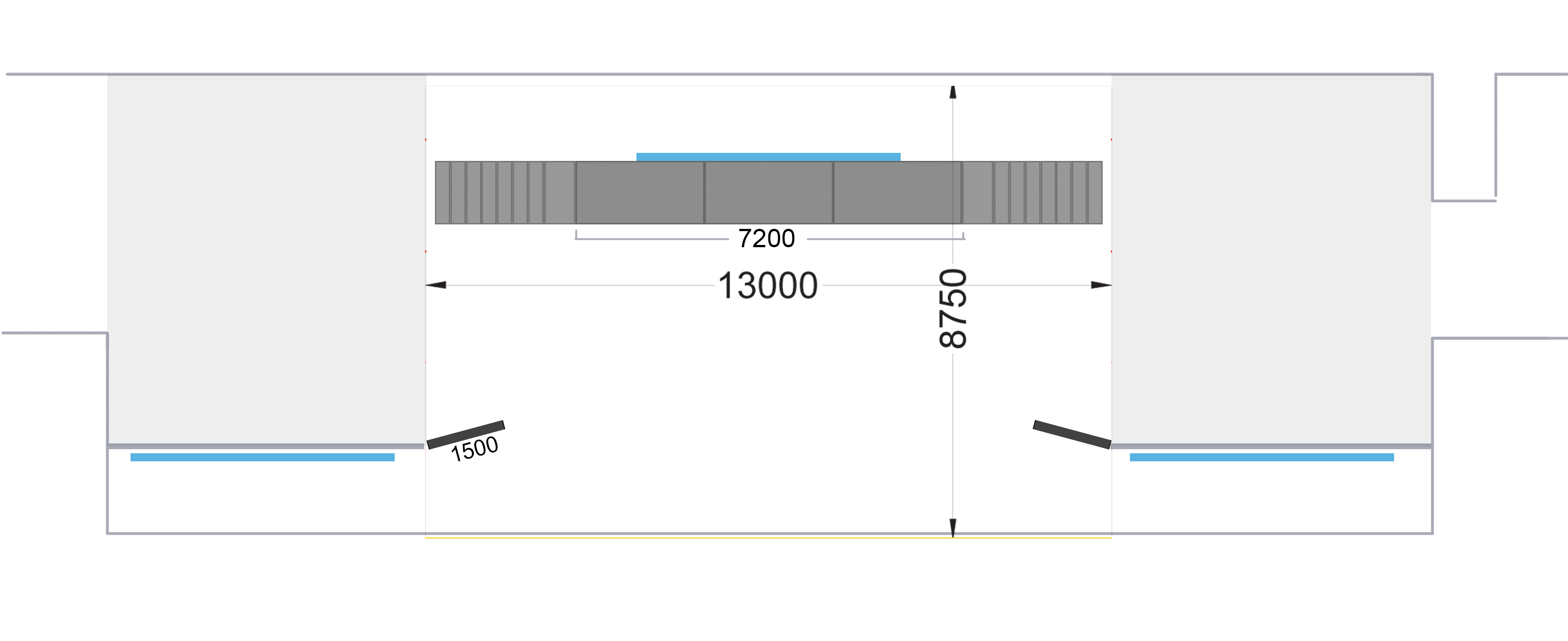
Every element of the video design was produced within a single integrated pipeline — from 3D asset creation and rendering through to compositing, editorial and final delivery — managed entirely by one person across six primary tools. The pipeline was shaped by the specific demands of each deliverable type, with bespoke bridging solutions built where standard workflows fell short.
 Notch Node Graph — Block Build
 Notch Node Graph — Extended Build View
Final delivery comprised 10 separate output files per scene across 9 scenes — one file per output, with the brick wall pixel grid requiring 3 split files due to its non-standard geometry. Total: 90 individual output files. QLab triggers MIDI to local media boxes on stage, which independently drive the pixel grids, LED costumes and LED props — including juggling equipment, hoops, staff and cyr wheel.
A production of this scale — 72 musical track changes, choreographed performer interaction, colour direction, narrative cues and pixel grid triggers across a 50-minute show — cannot be managed by intuition alone. Behind the visual work sits a precision data management system, built collaboratively with the show producer and choreographer, and adapted into the specific formats each tool in the pipeline required.
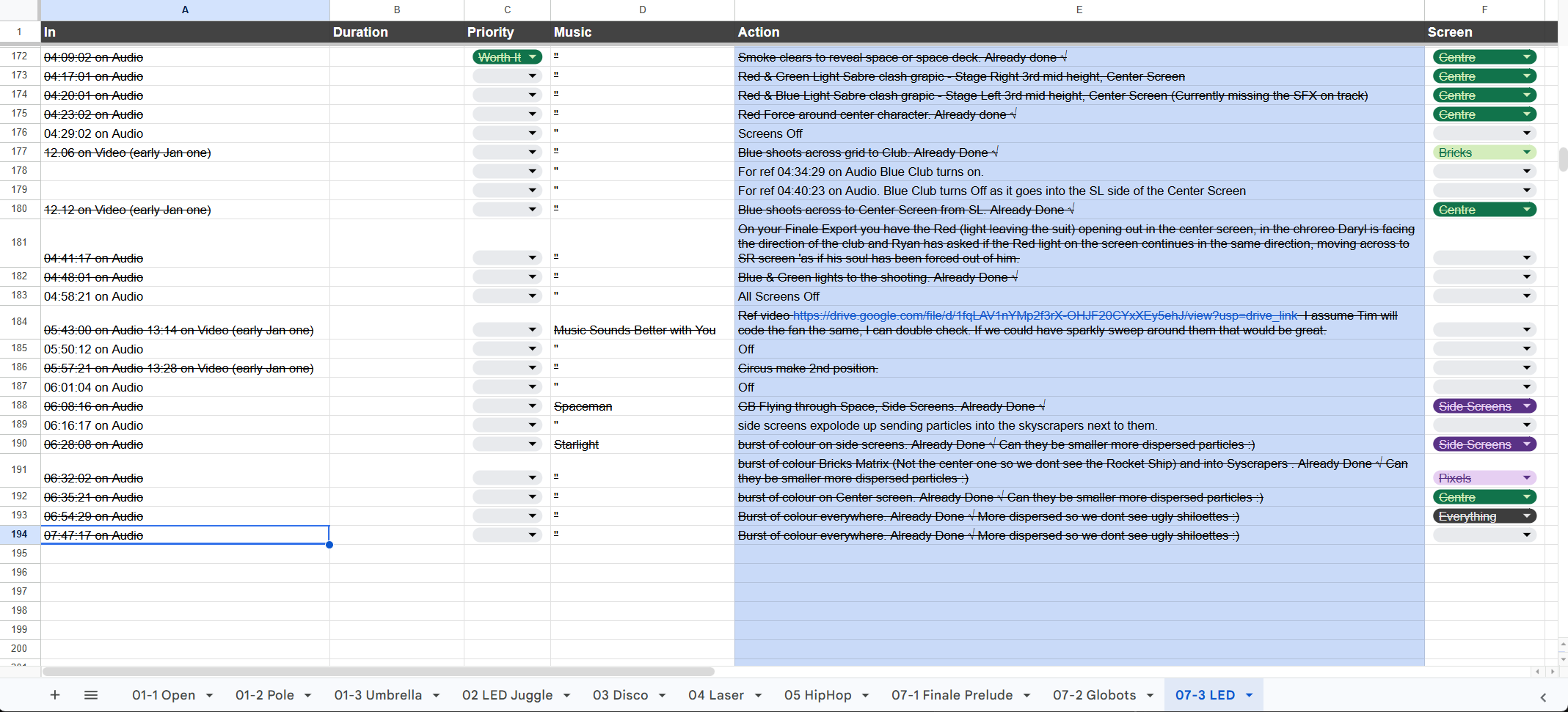 Master Cue Sheet — 500+ Cues Across the Show
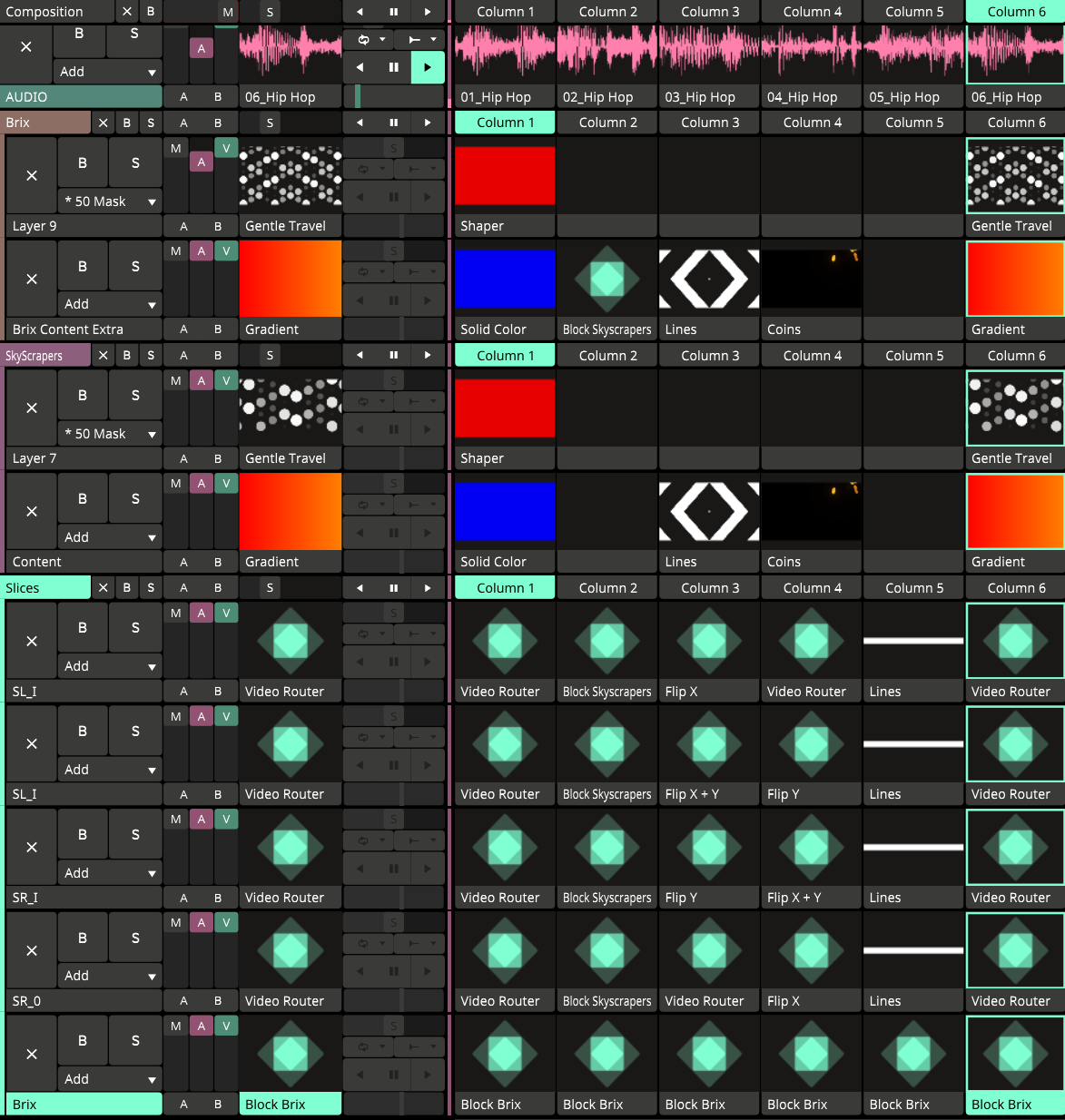 Resolume Composition — Look-Per-Column Structure
The visual world of Electric City: New Dimension didn't begin in software — it began in conversation. Commissioned from the outset of the production process, Jamie Shaw was involved in the creative development of the show from its earliest stages: interpreting a formal brief from The Production Boutique, developing the scene narrative and visual language in collaboration with the producer, and making the foundational design decisions that would define the show's identity.
The Production Boutique provided dramatic intent, emotional arc and key show moments — including a 1940s black-and-white opening that builds to full colour, and the overall show arc.
Each scene developed with a written brief in Notion before production began — visual intent, mood, palette direction and the relationship between screen content and live performance locked before build began.
Early style frames confirmed the anamorphic perspective, the SR/SL split identity, and the era-flexibility approach before any 3D work began.
Rendering approach, Notch matte system and pixel grid strategy all established during pre-production. The 80 days of production work were built on a resolved creative and technical foundation — not discovered in progress.
 Style Frame I
 Style Frame II
 Scene Narrative Development — Notion
A fully designed, multi-screen environment built from concept to delivery — with the creative and technical depth to serve a two-year, three-venue run.
Visual content designed not just to accompany music but to respond to its structure, energy and emotional arc — across 72 track changes, ~200 audio micro-sections and 500+ cues in a single show.
From Blender asset prep and Notch rendering through pixel map bridging, editorial and QLab delivery — one person, no handoffs, no gaps.
Custom HLSL shader for a non-standard pixel surface; path-traced EXR compositing for rendering quality beyond real-time limits; CSV timeline tooling to manage cue density at scale.
Working from a producer's dramatic brief to deliver a fully realised visual world — translating intent into execution across a long-form, iterative production relationship.
80 days of production, 90 output files, a two-year residency. This is not a one-off project but a long-term creative and technical engagement delivered to broadcast standard.
Jamie Shaw brings together creative world-building, technical precision and musical intelligence in a way that is rarely found in a single collaborator. If your production requires a visual world that genuinely enhances the live experience — not just accompanies it — this is the work that demonstrates what that looks like.
If you're developing a production that demands a high level of visual design — whether that's a large-scale live spectacular, an immersive environment, an LED-driven performance or anything in between — get in touch to discuss what's possible.